Precious metals ETFs offer a compelling investment avenue, providing diversified exposure to the precious metals market without the complexities of physically holding gold, silver, platinum, or palladium. This guide delves into the intricacies of these ETFs, examining their underlying dynamics, investment strategies, and historical performance. We’ll explore the factors influencing precious metal prices, compare various ETFs, and discuss the risks and rewards involved.
Understanding the relationship between precious metals and macroeconomic factors like inflation and geopolitical instability is crucial for informed investment decisions. This guide aims to equip readers with the knowledge necessary to navigate the world of precious metals ETFs effectively, empowering them to make strategic choices aligned with their financial goals.
Comparison of Different Precious Metals ETFs
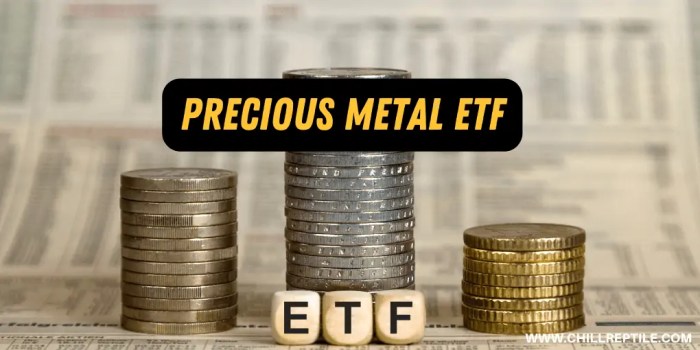
Investing in precious metals through Exchange Traded Funds (ETFs) offers diversification and convenient access to a commodity market often considered a safe haven during economic uncertainty. However, choosing the right ETF requires careful consideration of several factors, including investment objectives, underlying assets, and expense ratios. This section compares three prominent precious metals ETFs to illustrate the nuances of these investment vehicles.
Investment Objectives, Holdings, and Expense Ratios of Selected Precious Metals ETFs
Understanding the investment objectives, holdings, and expense ratios is crucial for making informed investment decisions. These factors directly influence the ETF’s performance and overall cost-effectiveness. The following bullet points compare three distinct ETFs: the SPDR Gold Shares (GLD), iShares Silver Trust (SLV), and Invesco DB Commodity Index Tracking Fund (DBC). Note that ETF holdings and expense ratios can change, so it’s always advisable to check the most up-to-date information from the provider’s website.
- SPDR Gold Shares (GLD): This ETF aims to reflect the performance of gold bullion. Its holdings primarily consist of physical gold bars stored in secure vaults. It generally has a low expense ratio, making it a cost-effective way to gain gold exposure.
- iShares Silver Trust (SLV): Similar to GLD, SLV tracks the price of silver bullion. Its holdings consist mainly of physical silver bars. Like GLD, it typically maintains a low expense ratio.
- Invesco DB Commodity Index Tracking Fund (DBC): Unlike GLD and SLV, DBC is a broad commodity index fund. While it includes gold and silver, it also invests in other commodities like oil and natural gas. Consequently, its performance is influenced by the broader commodity market, and its expense ratio might be higher than that of gold- or silver-only ETFs.
Performance Differences Between Gold and Silver ETFs
Gold and silver, while both precious metals, exhibit different price movements influenced by various economic and market factors. This leads to variations in the performance of ETFs tracking these metals.Gold is often seen as a safe-haven asset, meaning its price tends to increase during times of economic uncertainty or geopolitical instability. Silver, while also a precious metal, is more sensitive to industrial demand.
Therefore, its price can fluctuate more significantly based on factors such as manufacturing activity and technological advancements.
For example, during periods of high inflation, gold prices often rise as investors seek to protect their purchasing power. Conversely, silver’s price might respond more strongly to changes in industrial production.
The performance difference between gold and silver ETFs is not consistent; it varies depending on the prevailing market conditions. A detailed analysis of historical data is required to fully understand these differences. However, it’s generally accepted that gold exhibits less volatility than silver, making it a potentially less risky investment for some investors.
Precious Metals
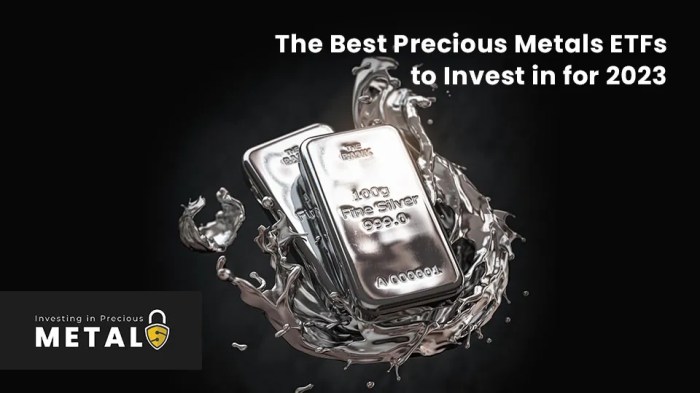
Precious metals, encompassing gold, silver, platinum, and palladium, have held significant value throughout history, driven by a complex interplay of factors extending beyond their inherent properties. Their enduring appeal stems from a combination of perceived scarcity, cultural significance, and their role as a store of value during times of economic uncertainty.
Factors Contributing to the Perceived Value of Precious Metals
The perceived value of precious metals is a multifaceted phenomenon. Their inherent properties, such as rarity, durability, and resistance to corrosion, contribute significantly to their desirability. Gold’s lustrous yellow color and malleability have made it a prized material for ornamentation and currency for millennia. Silver’s antimicrobial properties have added to its practical and symbolic value. Platinum and palladium’s resistance to corrosion and high melting points are crucial for industrial applications, further bolstering their value.
Beyond these physical attributes, the cultural and historical significance associated with precious metals plays a vital role. Gold, for example, has been consistently associated with wealth, power, and divinity across various cultures throughout history. This symbolic weight reinforces its perceived value, even independently of its industrial uses. Finally, the perceived stability of precious metals as a hedge against inflation and economic downturns fuels investment demand, further driving up prices.
This is exemplified by the increased demand for gold during periods of economic uncertainty, as investors seek safe haven assets.
Industrial Uses of Precious Metals
Beyond their investment appeal, precious metals play crucial roles in numerous industries. Gold’s excellent conductivity makes it indispensable in electronics, particularly in high-performance applications such as smartphones and computers. Silver is used extensively in solar panels due to its exceptional reflectivity and conductivity, making it vital for renewable energy technologies. Platinum and palladium are catalytic converters in automobiles, reducing harmful emissions.
Platinum is also critical in the production of chemotherapy drugs, showcasing its importance in the medical field. The diverse applications of these metals across various sectors underscore their importance beyond their role as investment vehicles. For example, the growing demand for electronics and renewable energy sources is directly linked to the increasing industrial demand for gold and silver, respectively.
The Role of Central Banks and Governments in Influencing Precious Metals Markets
Central banks and governments exert considerable influence on precious metals markets through their buying and selling activities. Central banks often hold significant gold reserves as part of their foreign exchange reserves, acting as a major force in the gold market. Their buying or selling decisions can significantly impact gold prices. Government policies, such as regulations on mining and refining, also play a role.
Import and export restrictions, environmental regulations, and tax policies can all affect the supply and demand dynamics of precious metals. For instance, a country imposing stricter environmental regulations on mining could reduce the supply of a particular metal, potentially leading to price increases. Conversely, government subsidies for mining operations might increase supply, influencing market prices downwards.
Environmental and Social Considerations Related to Precious Metal Mining and Refining
Precious metal mining and refining present significant environmental and social challenges. Mining activities can lead to habitat destruction, water pollution, and greenhouse gas emissions. The use of chemicals in the refining process can also pose risks to human health and the environment. Furthermore, mining operations can have negative social impacts on local communities, including displacement, health issues, and conflicts over resource access.
Sustainable mining practices, such as responsible sourcing and recycling, are crucial to mitigate these negative impacts. Initiatives promoting transparency and traceability in the precious metals supply chain are gaining traction, aiming to ensure that precious metals are sourced ethically and responsibly. The growing awareness of these environmental and social concerns is increasingly influencing investor preferences and corporate social responsibility initiatives.
Investing in precious metals ETFs presents a unique opportunity to diversify portfolios and potentially hedge against inflation. While inherent risks exist, careful consideration of investment strategies, ETF selection criteria, and a thorough understanding of market dynamics can significantly improve investment outcomes. This guide provides a foundational understanding, encouraging further research and consultation with financial advisors before making any investment decisions.
Question & Answer Hub
What are the tax implications of investing in Precious Metals ETFs?
Tax implications vary depending on your jurisdiction and holding period. Capital gains taxes may apply upon sale, and dividend distributions (if any) are also taxable. Consult a tax professional for personalized advice.
How do I buy and sell Precious Metals ETFs?
Precious Metals ETFs are traded like stocks on major exchanges. You can buy and sell them through a brokerage account, just as you would with any other publicly traded security.
Are Precious Metals ETFs suitable for all investors?
No, Precious Metals ETFs carry risk, and suitability depends on individual risk tolerance, investment goals, and overall portfolio diversification. They are generally considered a long-term investment, not suitable for short-term speculation.
What are the risks associated with currency fluctuations when investing in Precious Metals ETFs?
Precious metals are priced in various currencies (often USD). Fluctuations in exchange rates can impact the value of your investment, particularly if you are not investing in the currency the ETF is denominated in.