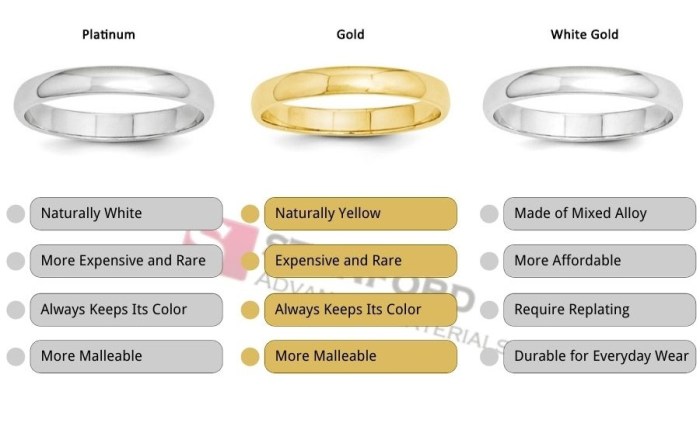
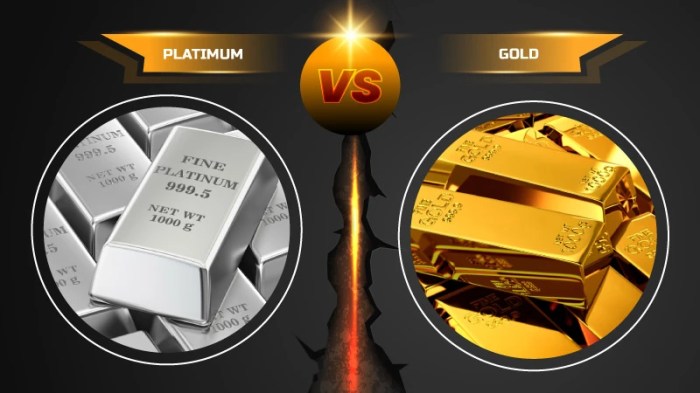
The allure of precious metals has captivated humanity for millennia, their inherent value woven into the fabric of history and finance. Platinum and gold, two titans of this exclusive club, stand as symbols of wealth, status, and enduring beauty. But beyond their shared prestige, these metals possess distinct characteristics that shape their individual applications and investment potential. This exploration delves into the fascinating world of platinum versus gold, comparing their physical properties, economic influences, and ethical considerations.
From their contrasting densities and melting points to their diverse industrial uses in electronics and jewelry, we will unravel the nuanced differences that set these remarkable elements apart. We will also analyze their historical price performance, examining the factors driving their market fluctuations and assessing the risks and rewards associated with investing in each. Finally, we will touch upon the environmental and ethical considerations inherent in their extraction and trade, highlighting the importance of responsible sourcing and sustainable practices.
Physical Properties
Platinum and gold, while both precious metals prized for their beauty and value, exhibit distinct differences in their physical properties. Understanding these differences is crucial for their various applications, from jewelry to industrial uses. This section will delve into a detailed comparison of their density, melting point, malleability, appearance, and chemical reactivity.
Physical Property Comparison
The following table summarizes key physical properties of platinum and gold, highlighting their similarities and differences:
| Property | Platinum | Gold | Difference |
|---|---|---|---|
| Density (g/cm³) | 21.45 | 19.3 | Platinum is denser; approximately 11% more dense than gold. |
| Melting Point (°C) | 1768 | 1064 | Platinum has a significantly higher melting point; approximately 66% higher than gold. |
| Malleability | High | High | Both are highly malleable, meaning they can be easily hammered or rolled into thin sheets. Platinum is slightly less malleable than gold. |
| Tensile Strength (MPa) | 170-200 | 100-200 | Platinum exhibits a higher tensile strength in some cases, indicating greater resistance to stretching or breaking. |
Appearance
Platinum, in its pure form, possesses a silvery-white luster. Its surface reflects light with a subdued brilliance, lacking the intense shine often associated with gold. Imagine a polished steel surface, but with a slightly cooler, less reflective tone. This muted sheen contributes to platinum’s sophisticated and understated elegance. Its color is consistent and unchanging, unlike gold, which can appear slightly different in various forms.Gold, conversely, is renowned for its intense, characteristic yellow color.
This vibrant hue, coupled with its brilliant metallic luster, gives it an unparalleled radiance. Visualize a highly polished, smooth surface that reflects light with a warm, golden glow. The intensity of the color and the reflectivity can vary slightly depending on the purity and crystalline structure of the gold.
Chemical Reactivity and Corrosion Resistance
Both platinum and gold are exceptionally resistant to corrosion. This inherent inertness is a key factor in their value and wide-ranging applications. Platinum’s resistance stems from its strong metallic bonding and its reluctance to participate in chemical reactions. It remains largely unaffected by exposure to air, water, and most acids and bases. Only strong oxidizing agents, such as aqua regia (a mixture of nitric and hydrochloric acids), can dissolve platinum.Gold, similarly, displays remarkable resistance to corrosion.
Its high electronegativity makes it chemically stable, preventing oxidation or reaction with most substances. While aqua regia can dissolve gold, its resistance to most other chemicals is legendary. This inertness is what makes both metals ideal for use in jewelry, electronics, and other applications where chemical stability is paramount. The exceptional resistance to corrosion ensures that these metals maintain their luster and integrity over extended periods.
Investment Aspects
Platinum and gold have long held positions as valuable investment assets, each offering unique characteristics and risk-reward profiles. Understanding their historical performance and the factors influencing their prices is crucial for informed investment decisions. While both are considered safe haven assets, their price movements differ significantly, influenced by diverse economic and industrial factors.
Historical Price Performance
A line graph depicting the price fluctuations of platinum and gold over the past decade would show periods of both correlation and divergence. For example, from 2014 to 2016, both metals experienced a general downward trend, reflecting a weakening global economy. However, from 2016 to 2021, gold experienced a substantial price increase driven by factors such as low interest rates and increased uncertainty, while platinum’s price remained relatively stagnant, impacted by reduced industrial demand.
More recently, both metals have shown increased volatility influenced by geopolitical events and inflation concerns. The data would show that while both have long-term upward trends, the rate of increase and the timing of price peaks and troughs differ considerably. Specifically, the graph would illustrate the periods of divergence and convergence in the price movements of both metals, with clear annotations highlighting key events and economic conditions that influenced these price fluctuations.
For instance, the impact of the COVID-19 pandemic and the subsequent economic recovery would be prominently featured.
Factors Influencing Price
Several factors interact to determine the price of both platinum and gold. Supply and demand dynamics play a fundamental role. For gold, central bank buying and jewelry demand are significant drivers, while platinum’s price is heavily influenced by its industrial applications in the automotive and chemical sectors. Investor sentiment, often reflected in the price of the US dollar and global economic uncertainty, is a major factor affecting both metals.
Geopolitical instability and inflation expectations can also significantly influence price movements. For instance, a weakening US dollar often leads to an increase in demand for both metals as investors seek alternative stores of value. Similarly, inflationary pressures can drive investors towards precious metals as a hedge against currency devaluation.
Risk and Return Profiles
Investing in platinum carries a higher risk profile than investing in gold. Platinum’s price is more susceptible to fluctuations due to its greater dependence on industrial demand, making it more vulnerable to economic downturns and shifts in specific industrial sectors. Gold, on the other hand, tends to be viewed as a more stable investment due to its broader appeal as a safe-haven asset and its established role in jewelry and investment markets.
Historically, gold has demonstrated a relatively higher long-term return compared to platinum, but with potentially lower volatility. The higher risk associated with platinum investing potentially offers higher returns during periods of strong industrial growth, but conversely, exposes investors to larger potential losses during economic contractions. Therefore, the choice between platinum and gold depends on an investor’s risk tolerance and investment horizon.
Industrial Applications
Platinum and gold, while both precious metals, find vastly different applications in industry due to their unique properties. Gold’s malleability and resistance to corrosion make it ideal for electronics and certain chemical processes, while platinum’s high melting point and catalytic activity are crucial in automotive and chemical applications. The following sections detail the specific industrial uses of each metal and explore the future demand projections based on current trends.
Platinum Industrial Applications
Platinum’s remarkable properties, particularly its catalytic activity and resistance to high temperatures and corrosion, are central to its industrial applications. Its use is often driven by its ability to accelerate chemical reactions without being consumed in the process.
- Automotive Catalysts: Platinum is a vital component in catalytic converters, reducing harmful emissions from vehicles. The high surface area of platinum allows it to effectively convert pollutants like nitrogen oxides and carbon monoxide into less harmful substances. The ever-increasing global vehicle fleet ensures continued, albeit potentially fluctuating, demand for platinum in this sector.
- Chemical Industry: Platinum is used as a catalyst in various chemical processes, including the production of nitric acid, silicones, and pharmaceuticals. Its ability to catalyze reactions at high temperatures and pressures makes it indispensable in many large-scale chemical manufacturing processes. The growth of the chemical industry, particularly in developing economies, is expected to drive demand for platinum.
- Petroleum Refining: Platinum-based catalysts are employed in petroleum refining to improve the quality of gasoline and other petroleum products. These catalysts facilitate processes like isomerization and reforming, which enhance the octane rating and overall performance of fuels. Continued global demand for petroleum products, although facing some long-term uncertainty with the shift towards renewable energy, will support the demand for platinum in this area.
Gold Industrial Applications
Gold’s unique combination of properties, including its excellent electrical conductivity, corrosion resistance, and malleability, has led to its widespread use in various industrial sectors.
- Electronics: Gold’s high electrical conductivity and resistance to corrosion make it an essential material in electronics. It’s used in connectors, integrated circuits, and other components where reliable electrical contact is crucial. The continued miniaturization and increasing complexity of electronic devices will sustain the demand for gold in this sector, although advancements in material science might introduce some competition.
- Medical Applications: Gold’s biocompatibility and inertness have made it suitable for use in medical devices and implants. It’s used in dental fillings, drug delivery systems, and other medical applications where biocompatibility is paramount. The aging global population and the growth of the medical technology sector are likely to drive further demand for gold in medical applications.
- Chemical Industry: Gold is also used in some specialized chemical processes, although to a lesser extent than platinum. Its resistance to corrosion makes it suitable for handling corrosive chemicals and in some specialized catalysts. The demand for gold in this area is expected to remain relatively stable, linked to the overall growth of the chemical industry.
Future Demand Projections
Predicting future demand for both platinum and gold requires considering several factors, including technological advancements, economic growth, and environmental regulations. While precise figures are difficult to project, the overall demand for both metals is anticipated to remain strong, driven by existing applications and potential new uses. For example, the growing electric vehicle market could potentially reduce platinum demand in automotive catalysts, while increased demand for renewable energy infrastructure might open up new applications for both metals.
The long-term outlook for both platinum and gold remains positive, although subject to market fluctuations and technological disruptions.
Environmental and Ethical Considerations
The extraction and processing of platinum and gold, while yielding valuable resources, carry significant environmental and ethical implications. These impacts extend from the initial mining operations to the final stages of product manufacturing and disposal, necessitating a thorough examination of both the ecological footprint and the social responsibility associated with these precious metals.The environmental impact of platinum and gold mining is multifaceted and often severe.
Mining activities can lead to extensive land degradation, including deforestation, habitat loss, and soil erosion. The use of large-scale machinery compacts the soil, disrupting natural drainage patterns and increasing the risk of landslides. Furthermore, the processing of ores often involves the use of chemicals that can contaminate water sources, harming aquatic life and potentially impacting human health through contaminated drinking water.
Acid mine drainage, a common byproduct of mining, releases heavy metals and sulfuric acid into the environment, causing long-term ecological damage.
Environmental Impacts of Platinum and Gold Mining
Large-scale mining operations for platinum and gold often result in significant habitat destruction and biodiversity loss. The removal of topsoil and vegetation exposes the underlying geology to erosion, leading to significant land degradation. Water pollution is another major concern. The use of cyanide in gold mining, for example, is a particularly toxic process that can contaminate rivers and groundwater sources, posing a serious threat to both aquatic ecosystems and human populations relying on these water sources.
Examples include instances in certain regions of South America and Africa where improper disposal of mining waste has led to widespread water contamination and subsequent health problems for local communities. The environmental remediation of these sites is costly and time-consuming, highlighting the long-term consequences of unsustainable mining practices.
Ethical Considerations in Platinum and Gold Supply Chains
Ethical concerns surrounding platinum and gold extend beyond environmental damage to encompass labor practices and conflict minerals. In some regions, mining operations are associated with human rights abuses, including unsafe working conditions, child labor, and exploitation of workers. The lack of transparency and traceability in the supply chain makes it difficult to guarantee that the metals used in consumer products are sourced ethically.
The presence of conflict minerals, minerals mined in conflict zones and used to finance armed groups, is another significant ethical challenge. These minerals can be traced back to specific regions where armed conflicts are fueled by the profits from mineral extraction, contributing to instability and human rights violations. For example, the Democratic Republic of Congo has experienced significant conflict linked to the extraction of coltan, a mineral used in the production of electronic components, highlighting the complex links between mining and armed conflict.
Sustainable Mining Practices and Responsible Sourcing
The increasing awareness of the environmental and ethical challenges associated with platinum and gold mining has led to a growing focus on sustainable mining practices and responsible sourcing initiatives. These initiatives aim to minimize the environmental impact of mining operations while ensuring fair labor practices and ethical sourcing throughout the supply chain. Examples include the implementation of stricter environmental regulations, the development of cleaner mining technologies, and the promotion of certification schemes that guarantee the responsible sourcing of metals.
The use of closed-loop water systems, the recycling of mining waste, and the adoption of energy-efficient technologies can all contribute to reducing the environmental footprint of platinum and gold mining. Furthermore, the implementation of robust due diligence processes throughout the supply chain can help to prevent the use of conflict minerals and ensure fair labor practices. These initiatives, though challenging to implement universally, represent a crucial step towards a more sustainable and ethical future for the platinum and gold industry.
Precious Metals
The global precious metals market is a complex and dynamic system, influenced by a multitude of factors ranging from industrial demand to geopolitical events. Understanding this market requires examining its key players, the role of these metals in the global financial architecture, and the forces that drive price fluctuations.
Global Market Overview
The global market for precious metals, encompassing gold, silver, platinum, and palladium, is characterized by significant production and consumption across various regions. Major producers of gold include China, Australia, Russia, and Canada, while leading consumers are found in India, China, and the United States. Silver production is dominated by Mexico, Peru, and China, with significant consumption in the electronics and photographic industries worldwide.
Platinum group metals (PGMs), including platinum and palladium, are primarily produced in South Africa and Russia, with significant demand from the automotive industry (catalytic converters) and jewelry markets. The distribution of production and consumption highlights the interconnectedness of the global economy and the influence of regional economic factors on precious metal markets.
Precious Metals in International Finance
Precious metals, particularly gold, have historically played a crucial role in international finance and monetary systems. Gold’s inherent value and scarcity have made it a store of value and a hedge against inflation for centuries. While the gold standard is largely a relic of the past, central banks still hold significant gold reserves, which serve as a form of international currency backing and a safeguard against economic instability.
The role of other precious metals in international finance is less pronounced, but their value and stability continue to influence investment decisions and global economic trends. For example, the price of gold can significantly impact currency exchange rates, particularly in emerging markets.
Factors Influencing Precious Metal Prices
Several factors contribute to the price fluctuations observed in the global precious metals market. Supply and demand dynamics are paramount: increased industrial demand, for example, can drive prices upwards, while a surge in mining production can exert downward pressure. Geopolitical instability and economic uncertainty often lead investors to seek refuge in precious metals, increasing demand and boosting prices.
Inflationary pressures also tend to drive up precious metal prices, as investors seek to protect their purchasing power. Furthermore, currency exchange rates, investor sentiment, and speculation all play significant roles in shaping the overall price movements of these valuable commodities. For instance, a weakening US dollar can make precious metals, priced in dollars, more attractive to international investors, thereby pushing prices higher.
Ultimately, the choice between platinum and gold hinges on individual priorities and investment goals. While both offer potential for appreciation, their distinct properties and market dynamics dictate unique risk profiles. Understanding these nuances, including the environmental and ethical implications of their production, empowers informed decision-making, whether for investment purposes or industrial applications. The enduring value of these precious metals remains undeniable, but a comprehensive understanding of their differences is key to navigating their complex and fascinating world.
Top FAQs
What is the difference in durability between platinum and gold?
Platinum is significantly harder and more durable than gold, making it more resistant to scratches and wear. This contributes to its popularity in jewelry that sees frequent use.
Are platinum and gold hypoallergenic?
Platinum is generally considered more hypoallergenic than gold, as it is less reactive with the skin. However, individual sensitivities can vary.
Which metal is more resistant to tarnish?
Both platinum and gold are highly resistant to tarnish, but platinum exhibits even greater resistance due to its lower reactivity.
Which metal holds its value better over the long term?
Both platinum and gold have historically shown value retention, but their relative performance fluctuates over time depending on various economic and geopolitical factors. Neither is guaranteed to outperform the other.