The allure of precious metals – gold, silver, platinum, and palladium – as investment vehicles has captivated individuals and institutions for centuries. Their inherent value, stemming from scarcity and enduring demand, positions them as potential portfolio diversifiers and hedges against economic uncertainty. But which precious metal offers the best investment opportunity? Understanding the nuances of each metal’s market dynamics, industrial applications, and price volatility is crucial for making informed investment decisions.
This exploration delves into the characteristics of each metal, examining their historical performance, potential risks, and optimal investment strategies.
We will navigate the complexities of investing in precious metals, comparing the merits of physical ownership, exchange-traded funds (ETFs), and mining stocks. We’ll analyze the influence of factors such as inflation, geopolitical events, and industrial demand on price fluctuations. Ultimately, the goal is to equip you with the knowledge to confidently assess the potential of each precious metal within your investment strategy.
Introduction to Precious Metals
Precious metals have held a unique position throughout history, serving not only as mediums of exchange and adornment but also as reliable stores of value. Their inherent properties, combined with their relative scarcity, have solidified their role in diverse investment portfolios across centuries. Understanding these properties and their implications is crucial for any investor considering precious metals as part of their financial strategy.Precious metals derive their investment appeal from several key characteristics.
Their inherent scarcity limits supply, creating a natural constraint on availability and often driving up prices during periods of economic uncertainty or high demand. Durability is another critical factor; unlike paper currencies or other assets that can depreciate or become obsolete, precious metals resist degradation, maintaining their physical form and inherent value over extended periods. This inherent durability contributes to their status as a reliable store of value, acting as a hedge against inflation and currency devaluation.
Finally, their consistent demand across various industries, from jewelry and electronics to medicine and industrial applications, ensures ongoing market liquidity, making them relatively easy to buy and sell.
Physical Properties of Precious Metals
The following table compares the physical properties of four prominent precious metals: gold, silver, platinum, and palladium. These properties influence their respective uses and market dynamics. For instance, gold’s malleability and resistance to corrosion make it ideal for jewelry, while platinum’s high melting point and resistance to chemical attack are crucial for catalytic converters.
| Property | Gold (Au) | Silver (Ag) | Platinum (Pt) | Palladium (Pd) |
|---|---|---|---|---|
| Density (g/cm³) | 19.3 | 10.5 | 21.45 | 12.02 |
| Melting Point (°C) | 1064 | 962 | 1768 | 1555 |
| Boiling Point (°C) | 2856 | 2162 | 3827 | 2970 |
| Hardness (Mohs scale) | 2.5-3 | 2.5-3 | 4-4.5 | 4.5-5 |
| Electrical Conductivity | Excellent | Excellent | Good | Good |
Silver as an Investment
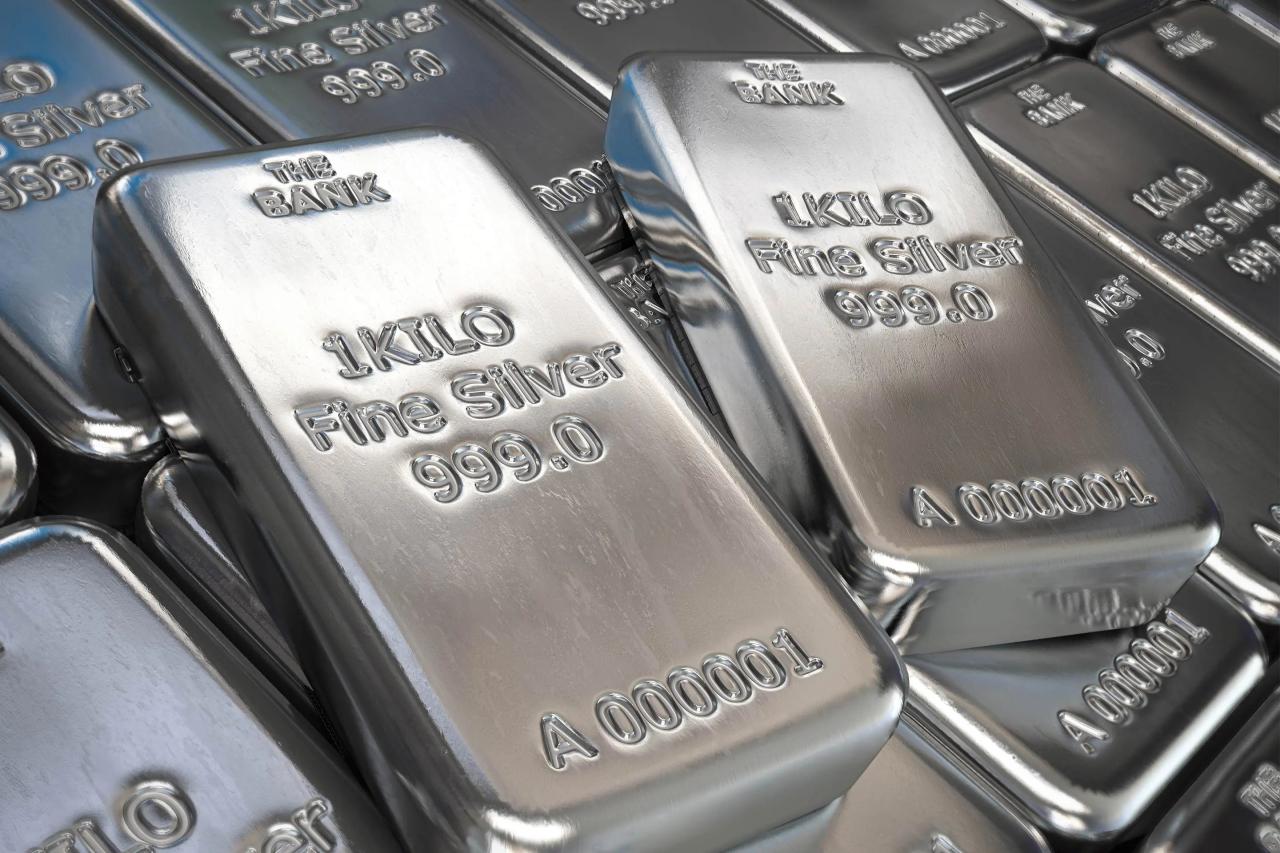
Silver, often overshadowed by its more glamorous counterpart, gold, presents a unique investment opportunity with its own set of advantages and drawbacks. Its dual role as a precious metal and an industrial commodity significantly influences its price dynamics, making it an interesting asset for diversified portfolios.Silver’s price is influenced by a complex interplay of factors, but a key driver is its substantial industrial demand.
Unlike gold, which is primarily valued as a safe haven asset and for jewelry, silver finds extensive use in various industries. This industrial demand acts as a significant price support, creating a different investment profile compared to gold.
Industrial Demand for Silver and Price Impact
The industrial applications of silver are vast and varied, spanning sectors like electronics, solar energy, and medical devices. Its exceptional electrical conductivity and antimicrobial properties make it indispensable in numerous technologies. Strong growth in these sectors, particularly the renewable energy sector, tends to boost silver demand and, consequently, its price. Conversely, economic downturns or technological shifts can negatively impact industrial demand, leading to price fluctuations.
For example, a slowdown in the electronics manufacturing sector could reduce silver demand and put downward pressure on its price. Conversely, increasing adoption of solar panels globally fuels significant demand, supporting silver prices.
Physical Silver versus Silver ETFs
Investing in silver can be approached in two primary ways: purchasing physical silver (bars, coins, bullion) or investing in silver exchange-traded funds (ETFs). Physical silver offers tangible ownership and can provide a sense of security, especially during times of economic uncertainty. However, it requires secure storage and incurs costs associated with purchasing, insuring, and storing the metal. Silver ETFs, on the other hand, offer a more convenient and liquid way to invest in silver.
They track the price of silver, allowing investors to participate in the market without the hassle of physical storage. However, ETFs carry management fees and are subject to the risks associated with the underlying asset and the ETF itself.
Risks and Rewards of Silver Compared to Gold
Compared to gold, silver exhibits higher price volatility. This increased volatility presents both higher risk and higher potential reward. While gold is often seen as a safe haven asset, silver’s industrial demand makes it more susceptible to economic cycles and technological advancements. This means that silver’s price can fluctuate more dramatically than gold’s, offering greater potential for profit but also a greater chance of loss.
Historically, silver has shown periods of outperformance compared to gold, particularly during periods of strong industrial growth. However, it’s crucial to acknowledge that this outperformance is not guaranteed and comes with increased risk.
Gold and Silver Price Volatility (Past Decade)
The following table compares the price volatility of gold and silver over the past decade (data is illustrative and should be verified with up-to-date market information from reliable sources). Note that volatility is represented here by the standard deviation of annual price changes, a common metric used to measure price fluctuations. Higher standard deviation implies greater volatility.
| Year | Gold Average Annual Price (USD) | Silver Average Annual Price (USD) | Volatility (Standard Deviation of Annual Price Change) |
|---|---|---|---|
| 2014 | 1260 | 19 | High |
| 2015 | 1150 | 15 | Medium |
| 2016 | 1250 | 17 | Low |
| 2017 | 1260 | 17 | Low |
| 2018 | 1270 | 16 | Medium |
| 2019 | 1400 | 15 | Medium |
| 2020 | 1800 | 25 | High |
| 2021 | 1750 | 25 | Medium |
| 2022 | 1700 | 20 | Medium |
| 2023 | 1900 | 23 | Medium |
Platinum and Palladium as Investments
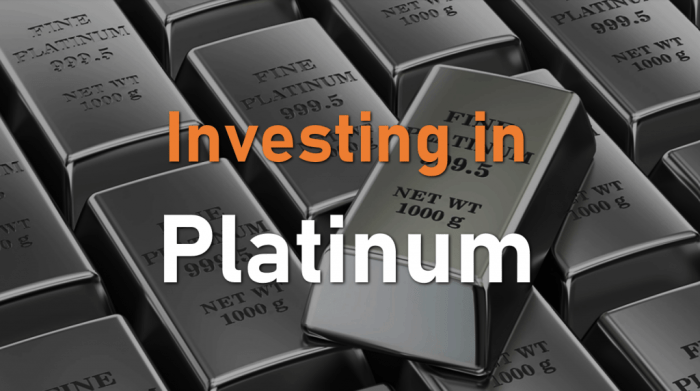
Platinum and palladium, while often grouped together as precious metals, exhibit distinct characteristics that influence their investment potential. Both are significantly utilized in industry, particularly in the automotive sector, a factor that heavily impacts their price volatility compared to gold and silver, which are more heavily influenced by safe-haven demand. Understanding these industrial applications and market dynamics is crucial for investors considering these metals.Platinum and palladium share some industrial uses but have key differences that drive their respective price movements.
Both are used extensively in catalytic converters, crucial components in reducing harmful emissions from vehicles. However, platinum’s higher melting point and resistance to corrosion make it suitable for a broader range of industrial applications, including jewelry, electronics, and medical devices. Palladium, while also used in catalytic converters, finds greater application in dentistry and electronics due to its lower cost and superior workability.
This difference in application breadth affects supply and demand, consequently impacting price fluctuations.
The Automotive Industry’s Influence on Platinum and Palladium Demand
The automotive industry is a dominant force in the demand for platinum and palladium. The stringent emission regulations globally have led to a significant increase in the use of catalytic converters, driving up demand for these metals. Fluctuations in global automotive production, driven by factors such as economic growth, technological advancements (like electric vehicles), and government policies, directly translate into price changes for platinum and palladium.
For example, a period of strong global economic growth typically sees increased automotive production and higher demand for these metals, leading to price increases. Conversely, a downturn in the automotive sector can cause prices to fall.
Platinum and Palladium’s Outperformance Potential
Under specific market conditions, platinum and palladium have the potential to outperform gold and silver. Periods of strong industrial growth, particularly in the automotive and technology sectors, can lead to increased demand for these metals, driving prices higher. Furthermore, geopolitical instability in key platinum and palladium producing regions can disrupt supply, leading to price spikes. For example, disruptions in South African platinum mining due to labor disputes or political unrest have historically led to price increases.
Conversely, a shift towards electric vehicles could negatively impact demand, potentially leading to underperformance compared to gold, which often serves as a safe-haven asset during economic uncertainty.
Factors Driving the Price Difference Between Platinum and Palladium
The price difference between platinum and palladium is influenced by several factors, primarily supply and demand dynamics within their respective industrial applications. The higher melting point and corrosion resistance of platinum make it suitable for a broader range of applications, leading to greater demand in certain sectors. However, palladium’s lower cost and superior workability make it a more attractive option for some applications, such as certain types of catalytic converters.
Technological advancements, particularly in catalytic converter technology, can also significantly influence the relative demand for each metal. For instance, the development of palladium-rich catalytic converters has, at times, led to increased demand for palladium relative to platinum. Furthermore, fluctuations in the supply of either metal from major producing countries can also contribute to price discrepancies.
Precious Metals Market Analysis (without explicit analysis)

Understanding the dynamics of the precious metals market requires examining the key players, trading mechanisms, and the fundamental forces of supply and demand that shape prices. This section provides an overview of these crucial aspects without delving into specific market predictions or forecasts.The precious metals market is a complex ecosystem involving numerous participants, each with its own influence on price fluctuations and market trends.
These interactions create a dynamic environment that requires careful observation and understanding.
Key Players in the Precious Metals Market
The precious metals market is characterized by a diverse range of participants, each playing a unique role in shaping market dynamics. These include entities with significant influence on both supply and demand.
- Central Banks: Central banks globally hold substantial reserves of gold, influencing its price through buying and selling activities. Their actions often reflect geopolitical considerations and macroeconomic strategies.
- Mining Companies: Mining companies are primary suppliers of precious metals, and their production levels directly impact market supply. Factors such as operating costs, technological advancements, and geopolitical stability influence their output.
- Investment Funds: Exchange-traded funds (ETFs) and other investment funds focusing on precious metals provide investors with diversified access to the market. Their investment decisions significantly impact demand and prices.
- Jewelry and Industrial Consumers: The jewelry industry is a major consumer of precious metals, particularly gold and platinum. Industrial applications also play a significant role, with platinum group metals (PGMs) essential in various sectors.
- Individual Investors: Individual investors contribute to market demand through direct purchases of bullion, coins, and other precious metal products. Their collective actions can influence price trends, particularly in periods of economic uncertainty.
Major Precious Metals Exchanges and Trading Mechanisms
Precious metals are traded on various exchanges worldwide, employing different trading mechanisms. Understanding these platforms and their operating principles is essential for navigating the market effectively.
- London Bullion Market Association (LBMA): The LBMA is a significant player, setting benchmark prices for gold and silver. Its role in price discovery and market transparency is substantial.
- COMEX (New York Mercantile Exchange): COMEX offers futures contracts for gold, silver, platinum, and palladium, providing a platform for hedging and speculation.
- Other Exchanges: Various other exchanges worldwide facilitate precious metals trading, each with its own specific characteristics and trading hours.
- Over-the-Counter (OTC) Markets: A significant portion of precious metals trading occurs through OTC markets, involving larger transactions between institutional investors and banks.
Influence of Supply and Demand on Precious Metals Prices
The fundamental principle governing precious metals prices is the interaction of supply and demand. Shifts in either side of the equation can significantly impact prices.
- Supply Factors: Mining production, recycling rates, and geopolitical events impacting mining operations are key supply-side factors influencing prices.
- Demand Factors: Investment demand, industrial consumption, and jewelry demand are primary drivers of precious metals prices. Economic conditions, investor sentiment, and technological advancements influence these factors.
- Price Discovery: The interplay of supply and demand forces determines market prices through the trading mechanisms described above. Price fluctuations reflect the constant adjustments in the market’s equilibrium.
Risks Associated with Precious Metals Investing

Investing in precious metals, while offering potential for diversification and hedging against inflation, carries inherent risks. Understanding these risks and implementing appropriate mitigation strategies is crucial for successful investment. Failure to do so can lead to significant losses.
Price Volatility
Precious metals prices are notoriously volatile, subject to fluctuations influenced by a multitude of factors including global economic conditions, investor sentiment, and geopolitical events. A sudden downturn in the market can result in substantial losses, particularly for those holding significant positions in a short timeframe. For example, the price of gold experienced sharp drops in 2020 and 2022 due to factors such as unexpected economic recovery and changes in investor risk appetite.
These fluctuations highlight the need for careful consideration of investment timelines and risk tolerance.
Storage Costs
Storing physical precious metals like gold, silver, platinum, and palladium incurs costs. These costs can range from safe deposit box rentals to the expense of securing high-security vaults for larger holdings. Insurance premiums also add to the overall cost of ownership, reducing potential returns. For smaller investors, these costs might be relatively insignificant; however, for larger investors, these costs can become a substantial factor impacting profitability.
The choice between physical possession and exchange-traded funds (ETFs) significantly influences storage costs.
Geopolitical Events
Geopolitical instability significantly impacts precious metals markets. Events such as wars, political upheavals, and sanctions can trigger safe-haven buying, driving prices upward. Conversely, periods of relative global stability can lead to price declines as investors shift their focus to other asset classes. The 2014 Crimean crisis, for example, led to a surge in gold prices as investors sought refuge from uncertainty.
Similarly, the ongoing conflict in Ukraine has created volatility in precious metals markets.
Risk Mitigation Strategies
| Mitigation Strategy | Description | Effectiveness | Considerations |
|---|---|---|---|
| Diversification | Spread investments across different precious metals and other asset classes to reduce reliance on any single market. | High | Requires careful asset allocation based on risk tolerance and investment goals. |
| Dollar-Cost Averaging (DCA) | Invest a fixed amount of money at regular intervals, regardless of price fluctuations. | Medium to High | Reduces the impact of market timing and volatility but might result in lower overall returns if prices consistently fall. |
| Hedging | Use futures contracts or options to protect against price declines. | Medium to High | Requires understanding of derivatives markets and carries its own set of risks. |
| Long-Term Investment Horizon | Hold investments for an extended period to ride out short-term price fluctuations. | High | Requires patience and tolerance for volatility; less suitable for short-term gains. |
| ETFs | Invest in precious metals ETFs to avoid the costs and complexities of physical storage. | Medium | Involves counterparty risk and may not offer the same degree of control as physical ownership. |
Investing in precious metals presents a unique opportunity to diversify portfolios and potentially mitigate risks associated with traditional asset classes. While each metal—gold, silver, platinum, and palladium—possesses distinct characteristics and market dynamics, a thorough understanding of their inherent properties and external influences is key. By carefully considering individual risk tolerance, investment goals, and market conditions, investors can strategically allocate assets within the precious metals market to achieve their desired financial outcomes.
Remember that thorough research and professional financial advice are crucial before making any significant investment decisions.
FAQ Insights
What are the storage costs associated with physical precious metals?
Storage costs vary depending on the amount and type of metal, and whether you use a home safe, a bank vault, or a specialized storage facility. Costs can range from minimal for smaller amounts to significant expenses for larger holdings.
How are precious metal prices determined?
Precious metal prices are primarily determined by supply and demand on global exchanges. Factors like industrial demand, investor sentiment, currency fluctuations, and geopolitical events all influence these prices.
What are the tax implications of investing in precious metals?
Tax implications vary significantly depending on your location and the specific type of investment (physical metal, ETFs, mining stocks). Capital gains taxes typically apply to profits from selling precious metals. Consult a tax professional for specific guidance.
Are there ethical considerations when investing in precious metals?
Ethical considerations include concerns about the environmental impact of mining and the potential for conflict minerals. Researching the sustainability practices of mining companies and choosing responsibly sourced metals can help mitigate these concerns.