The silver market, a dynamic interplay of industrial demand and investment speculation, presents a fascinating case study in commodity pricing. Understanding the factors that influence silver’s value requires a nuanced perspective, encompassing macroeconomic trends, geopolitical events, and technological advancements. This analysis delves into the current market conditions, historical price movements, and future projections to provide a comprehensive understanding of this precious metal’s price trajectory.
From examining the impact of inflation and interest rates on silver investment to exploring the correlation between silver and other precious metals, we will uncover the key drivers shaping silver’s price. We’ll also consider the role of major producing countries and the evolving landscape of industrial applications, shedding light on both short-term and long-term price outlooks.
Current Silver Market Conditions
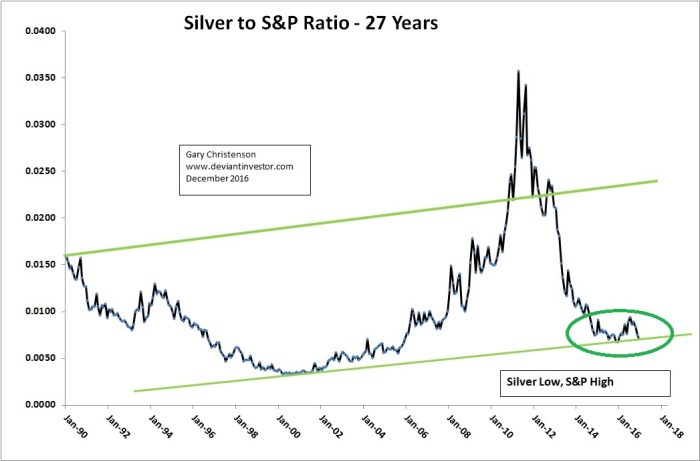
The silver market is currently experiencing a complex interplay of factors influencing both supply and demand. Prices have shown volatility in recent periods, reflecting the dynamic nature of this precious metal market and its sensitivity to global economic conditions and industrial activity. Understanding these dynamics is crucial for accurate forecasting and informed investment decisions.
Supply and demand are the fundamental drivers of silver prices. Currently, global silver production is relatively stable, though subject to various geopolitical and economic influences. Mining output from major producers is a significant factor, often fluctuating due to operational challenges, resource depletion, and government policies. Meanwhile, investment demand, heavily influenced by investor sentiment towards precious metals as a safe haven asset, adds another layer of complexity to price determination.
Major Silver Producing Countries and Global Supply
Several countries significantly influence global silver supply. Mexico, Peru, and China consistently rank among the top producers. Changes in mining operations, regulatory environments, and economic conditions within these nations directly impact the overall availability of silver on the global market. For example, a significant production disruption in Mexico due to labor disputes or environmental regulations could lead to a noticeable price increase.
Similarly, changes in Chinese industrial activity, which consumes a significant portion of silver, can impact both demand and supply dynamics. Production levels in these countries are closely monitored by market analysts to gauge potential shifts in supply.
Industrial and Investment Demand for Silver
Silver’s dual nature as both an industrial metal and an investment asset shapes its demand. Industrial applications, including electronics, solar energy, and photography, account for a substantial portion of global silver consumption. Growth in these sectors typically translates to higher silver demand. Conversely, a slowdown in these industries can negatively impact silver prices. Investment demand, driven by factors such as economic uncertainty and inflation concerns, can significantly influence prices.
Exchange-traded funds (ETFs) and physical bullion purchases by investors act as a major buffer, absorbing surplus silver or creating shortages depending on market sentiment. For instance, during periods of economic instability, investors often flock to silver as a safe-haven asset, driving up demand and prices.
Key Silver Market Indicators
| Indicator | Current Value | Trend | Impact |
|---|---|---|---|
| Silver Spot Price (USD/oz) | (Insert Current Spot Price – obtain from a reliable source like kitco.com or similar) | (Up/Down/Stable – based on recent price movement) | Directly impacts profitability for miners and investors. |
| Global Silver Mine Production (metric tons) | (Insert Current Production Data – obtain from a reputable source like the Silver Institute) | (Up/Down/Stable – based on recent production trends) | Influences overall supply and price. |
| Industrial Demand (metric tons) | (Insert Data – obtain from a reliable source) | (Up/Down/Stable – based on industrial growth projections) | Major driver of silver consumption and price. |
| Investment Demand (metric tons) | (Insert Data – obtain from a reliable source like the World Silver Survey) | (Up/Down/Stable – based on investor sentiment and ETF holdings) | Significant influence on price volatility. |
Factors Influencing Silver Prices
Silver prices are a complex interplay of various economic and geopolitical factors. Understanding these influences is crucial for anyone involved in trading or investing in silver. This section will delve into the key drivers of silver price fluctuations.
Inflation’s Impact on Silver Prices
Inflation, a general increase in prices and fall in the purchasing value of money, often leads to increased demand for silver. Silver, like gold, is considered a safe haven asset during inflationary periods. Investors often flock to precious metals as a hedge against inflation, believing their value will hold or increase while fiat currencies lose purchasing power. For example, during periods of high inflation, like the 1970s, silver prices saw significant increases as investors sought to protect their wealth.
This increased demand pushes prices upwards. The rate of inflation, and the market’s perception of future inflation, significantly impacts silver’s attractiveness as an inflation hedge.
The US Dollar and Silver Prices
Silver is typically priced in US dollars. Therefore, an inverse relationship exists between the US dollar’s strength and silver prices. A stronger dollar makes silver more expensive for holders of other currencies, thus reducing demand and potentially lowering prices. Conversely, a weaker dollar makes silver more affordable, increasing demand and potentially pushing prices higher. This relationship isn’t always straightforward, however, as other factors can simultaneously influence silver prices, sometimes overwhelming the dollar’s effect.
Interest Rates and Silver Investment
Interest rates play a significant role in silver investment decisions. Higher interest rates generally make holding non-interest-bearing assets like silver less attractive. Investors may choose to shift their funds into interest-bearing accounts or bonds, reducing demand for silver and potentially lowering its price. Conversely, lower interest rates can make silver a more appealing investment, potentially driving up prices. This is because the opportunity cost of holding silver decreases when interest rates are low.
Silver Price Movements Compared to Other Precious Metals
Silver’s price movements often correlate with other precious metals, particularly gold. However, the degree of correlation can vary. While both are considered safe haven assets, silver is also an industrial metal, making its price more susceptible to fluctuations in industrial demand. For example, a surge in demand for electronics could boost silver prices more significantly than gold prices.
Platinum and palladium, other precious metals used in industrial applications, also show some correlation with silver, but their price movements can diverge based on specific industrial demand shifts.
Geopolitical Events Affecting Silver Prices
Geopolitical events can significantly impact silver prices due to their influence on supply, demand, and investor sentiment.
- Political instability in major silver-producing countries can disrupt supply chains and increase prices.
- International trade disputes and sanctions can impact the global flow of silver and influence prices.
- Major global conflicts can trigger safe-haven buying, pushing up silver prices.
- Changes in government regulations regarding mining or trade can affect silver production and availability.
- Unexpected events, such as natural disasters affecting silver mines, can lead to supply shortages and price increases.
Historical Silver Price Trends
Silver’s price history is a rollercoaster ride, reflecting its dual role as an industrial metal and a precious metal, influenced by diverse economic and geopolitical factors. Understanding these historical trends offers valuable insights into potential future price movements, although predicting the future with certainty remains impossible. Significant price swings have been observed throughout history, often linked to major economic shifts and global events.Silver prices have exhibited considerable volatility throughout history, with periods of both dramatic increases and significant declines.
These fluctuations are rarely isolated incidents, but rather the result of complex interactions between supply and demand dynamics, investor sentiment, and macroeconomic conditions.
Significant Historical Price Fluctuations
The price of silver has experienced several periods of dramatic change. For instance, the Hunt brothers’ attempt to corner the silver market in the early 1980s led to a sharp price surge, followed by a dramatic crash. This episode highlights the potential impact of speculative activity on silver prices. Another notable period was the silver boom of the late 1970s, driven by inflation and increasing industrial demand.
Conversely, periods of economic recession, such as the 2008 financial crisis, often led to lower silver prices as investors sought safer havens. The COVID-19 pandemic initially caused a sharp drop, followed by a recovery as investors sought alternative assets and industrial demand rebounded.
Periods of High Volatility and Contributing Factors
Several periods in silver’s history stand out for their high volatility. The 1970s, characterized by high inflation and geopolitical uncertainty, saw substantial price swings. The early 1980s, as mentioned previously, experienced extreme volatility due to the Hunt brothers’ actions. More recently, the period surrounding the 2008 financial crisis and the initial phases of the COVID-19 pandemic demonstrated significant price fluctuations driven by investor fear and uncertainty, coupled with shifts in industrial demand.
These periods underscore the sensitivity of silver prices to macroeconomic conditions and investor sentiment.
Examples of Past Market Predictions and Their Accuracy
Predicting silver prices has proven notoriously difficult. Many analysts have offered forecasts, ranging from wildly optimistic to excessively pessimistic. For example, some predictions made prior to the 2008 financial crisis failed to anticipate the sharp decline in silver prices. Similarly, predictions made in the early stages of the COVID-19 pandemic regarding silver’s price trajectory varied significantly, with some underestimating the initial drop and others overestimating the subsequent recovery.
The accuracy of past predictions has been mixed, emphasizing the inherent challenges in forecasting commodity prices.
Silver Price Movements Over the Last 10 Years (Illustrative Line Graph Description)
Imagine a line graph depicting silver prices over the last 10 years. The x-axis represents time (in years), and the y-axis represents the price of silver (in USD per troy ounce). The graph would show an initial period of relative stability, followed by a period of significant increase between [Insert Year] and [Insert Year], peaking around [Insert Price] USD per ounce.
This peak could be attributed to [mention specific factors, e.g., increased industrial demand, investor interest]. Subsequently, the graph shows a period of decline, reaching a trough around [Insert Year] at approximately [Insert Price] USD per ounce, potentially influenced by [mention specific factors, e.g., economic slowdown, reduced industrial demand]. The graph would then illustrate a gradual recovery and some volatility in the following years, ending at a price point of approximately [Insert Current Price] USD per ounce.
The graph would clearly illustrate the fluctuating nature of silver prices over the decade, highlighting periods of both significant growth and decline. Specific dates and price points would need to be sourced from reliable financial data providers for accuracy.
In conclusion, forecasting silver prices involves navigating a complex web of interconnected factors. While predicting the future with certainty is impossible, a thorough understanding of current market dynamics, historical trends, and future projections allows for informed speculation. By carefully considering the interplay of macroeconomic conditions, industrial demand, and investment sentiment, investors can develop a more robust strategy for navigating the silver market’s inherent volatility and potentially capitalizing on future price movements.
User Queries
What are the risks of investing in physical silver?
Risks include storage costs, security concerns, and potential price volatility. Diversification is key to mitigating risk.
How do ETFs differ from investing in physical silver?
ETFs offer a more convenient and liquid way to invest in silver, avoiding the storage and security issues of physical holdings. However, they are subject to market fluctuations and management fees.
What is the impact of technological advancements on silver demand?
Technological advancements, particularly in electronics and solar energy, are significant drivers of silver demand, potentially boosting prices in the long term.
Are there ethical considerations in silver mining?
Yes, ethical concerns surrounding environmental impact and labor practices within the silver mining industry should be considered when making investment decisions.